Dermatological Formulations & Rituals
Discovering white specks scattered across dark lapels is a frustrating disruption. When noticeable flaking emerges beneath facial hair, discerning beard dandruff vs dry skin is the essential first step toward lasting relief. While many grooming enthusiasts assume every flake signals parched tissue, suffocating an active fungal bloom with heavy balms only fuels microbial growth, intensifying redness and inflammation. Restoring harmony demands knowing whether your facial skin lacks basic hydration or battles a microbial imbalance.

How Do I Know if It Is Beard Dandruff or Dry Skin?
To differentiate beard dandruff from dry skin, evaluate flake size, coloration, and underlying skin sensation. Dry skin produces tiny, powdery white specks with tight, rough skin that calms quickly with light hydration. Fungal dandruff produces larger, greasy, yellowish flakes accompanied by redness, persistent itching, and heat beneath dense whiskers.
While both conditions create visible shedding, their physical characteristics differ markedly under close examination. Paying close attention to how these flakes feel between your fingers prevents damaging treatments:
1. Facial Xerosis (Simple Dry Skin)
Facial dry skin occurs when the outer stratum corneum loses critical moisture. Biting winds, dry heated interiors, or aggressive detergents strip natural skin ceramides. The resulting flakes are fine, white, and powdery, scattering like light dust. The underlying skin feels taut and rough, yet it rarely displays deep red swelling. It often peaks during frigid winter conditions and heals rapidly once gentle moisture is restored.
2. Seborrheic Dermatitis (True Beard Dandruff)
True beard dandruff is a microbial condition rather than simple dehydration. These flakes are visibly larger, clumped, and yellowish. Because they blend with excess human sebum, they feel greasy and soft between your fingers. The skin beneath turns warm and intensely red, accompanied by a sharp, persistent itch that returns just hours after washing.
| Diagnostic Metric | Dry Skin (Facial Xerosis) | Beard Dandruff (Seborrheic Dermatitis) |
|---|---|---|
| Flake Appearance | Minute, translucent-white, powdery specks | Large, irregular, yellowish flakes |
| Tactile Texture | Dry, chalky, non-adherent | Greasy, waxy, clumps easily |
| Dermal Sensation | Taut, tight, rough, mild intermittent prickle | Intense pruritus, burning, localized heat |
| Erythema (Redness) | Minimal to none; occasional windburn flush | Prominent pink to crimson inflamed plaques |
| Root Etiology | Trans-epidermal water loss, low sebum secretion | Malassezia colonization and lipid degradation |
| Heavy Balm Reaction | Rapid softening and noticeable comfort | Aggravated redness, clogged follicles, intensified flakes |
The Biological Mechanism: How Malassezia Yeast Triggers Flaking
Malassezia yeast causes beard dandruff by digesting triglycerides found in natural facial sebum, releasing irritating oleic acid directly onto the skin. In sensitive individuals, this acid disrupts the epidermal barrier (pH 4.5–5.5), speeding up cellular turnover from twenty-eight days to under seven, creating visible clusters of shedding skin cells.
To address facial flaking at the root, one must understand the delicate dermal microbiome. The skin naturally hosts microscopic fungal colonies, specifically Malassezia globosa and Malassezia restricta. These organisms thrive in lipid-rich zones across the jawline and cheeks, relying on human sebum for survival.
As the yeast consumes these lipids, it leaves behind unsaturated free fatty acids. For reactive skin, these byproducts degrade the protective stratum corneum. In response, your system sheds cells in disordered clumps rather than microscopic layers, generating noticeable greasy flakes.
Clinical dermatology confirms this fungal dynamic. Research published in PLOS ONE on microbial equilibrium in dandruff shows that persistent flaking correlates with dramatic shifts in bacterial and fungal balance. This confirms that stubborn beard dandruff is an active inflammatory reaction to yeast metabolites, not simple dehydration.

Can Heavy Beard Oils Make Fungal Dandruff Worse?
Heavy plant oils worsen fungal beard dandruff because Malassezia feeds on standard triglycerides. Applying rich butter or heavy vegetable fats gives the yeast more carbon-rich fuel to consume. This amplifies oleic acid production, intensifying redness and driving rapid cellular peeling across the jawline.
When grooming enthusiasts mistake fungal scaling for dry skin, they often apply dense balms, olive oil, or raw vegetable shortening. If the skin is genuinely moisture-depleted, these rich coatings bring immediate relief. But if flakes stem from yeast overgrowth, these formulas worsen the issue.
To explore how pure botanical extracts support facial wellness without suffocating pores, read our clinical analysis on does beard oil really stop itching and flakiness. High-purity botanical oils, such as cold-pressed jojoba (Simmondsia chinensis), do not feed Malassezia because jojoba is technically a liquid wax ester rather than a dietary triglyceride. Its molecular profile closely mimics natural sebum without serving as a fungal food source.
“True grooming refinement lies in precision. Nourishing the dermal barrier requires respecting its natural microbiology, rather than suffocating delicate tissue beneath heavy, occlusive fats.”
How to Get Rid of Dandruff on Your Beard: Targeted Treatment Protocols
To clear fungal beard dandruff, wash two to three times weekly with a sulfate-free foaming wash enriched with Dead Sea salt minerals to inhibit yeast biofilms. Follow by applying non-metabolizable liquid wax esters like jojoba to damp skin to rebuild your protective lipid barrier without feeding fungal organisms.
Because both conditions stem from entirely different physiological pathways, recovery requires a dedicated, tailored approach:
Protocol A: Managing Beard Dandruff (Seborrheic Reset)
- Purify the Follicle Bed: Cleanse your beard two to three times weekly with a mild, non-stripping wash. Our guide on sulfate-free beard wash protocol explains how gentle cleansing lifts away fungal fuel without inflaming delicate skin.
- Incorporate Marine Minerals: Utilize formulas enriched with Dead Sea salt (Maris Sal). Rich in magnesium and zinc, these minerals naturally slow fungal proliferation while calming visible redness.
- Switch to Fast-Absorbing Lipids: Avoid heavy vegetable fats on irritated skin. Select lightweight, cold-pressed jojoba, argan, and grape seed oils that absorb quickly and condition follicles cleanly.
Protocol B: Soothing Facial Xerosis (Moisture Sealing)
- Lower Water Temperature: Cleanse your face with lukewarm water. Steaming hot showers strip protective ceramides and spike trans-epidermal water loss.
- Eliminate Harsh Detergents: Never wash facial whiskers with standard hair shampoo or harsh soaps. As noted in our analysis on regular shampoo on beard damages skin, scalp-grade surfactants dissolve delicate facial lipids and weaken barrier health.
- Seal Moisture on Damp Skin: Massage three to four drops of natural botanical oil into damp whiskers right after rinsing to trap hydration inside the skin.
How to Moisturize Skin Under a Beard Without Feeding Yeast
Moisturizing dense facial hair requires parting whiskers to place lightweight oils directly onto the skin beneath. Instead of coating outer hair fibers, deposit three to four drops of cold-pressed jojoba or grape seed oil onto your fingertips. Gently massage the oil past the whiskers into the stratum corneum right after a warm wash, sealing in vital water without creating an occlusive layer.
Formulation Spotlight: Pure Dermal Hygiene
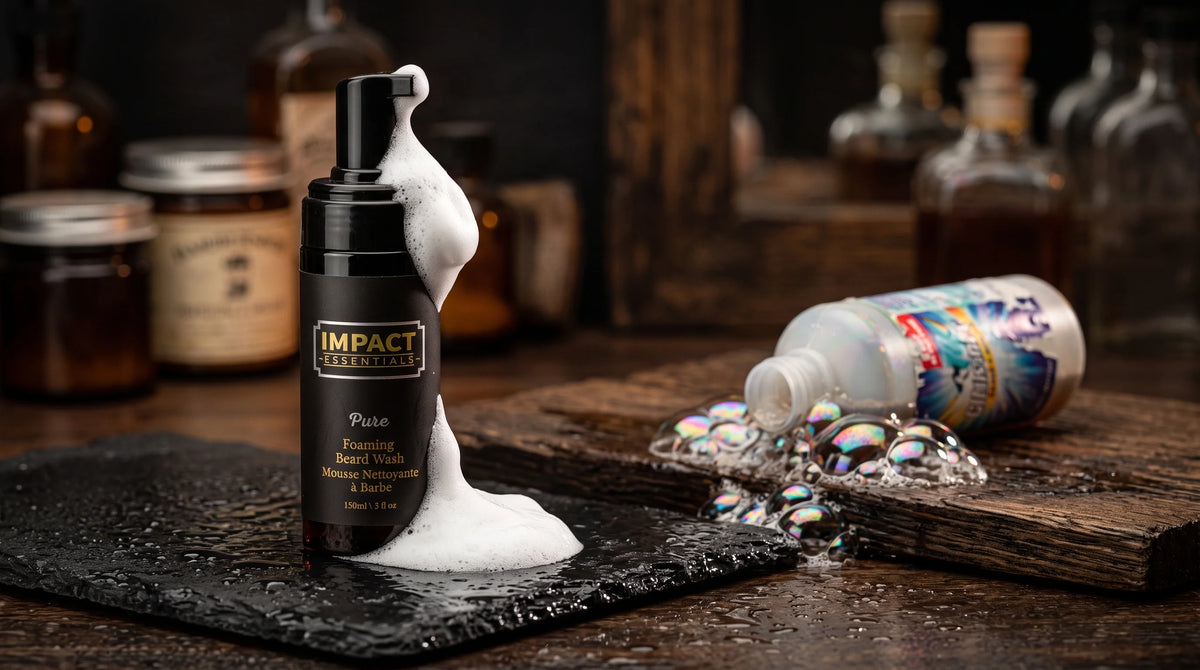
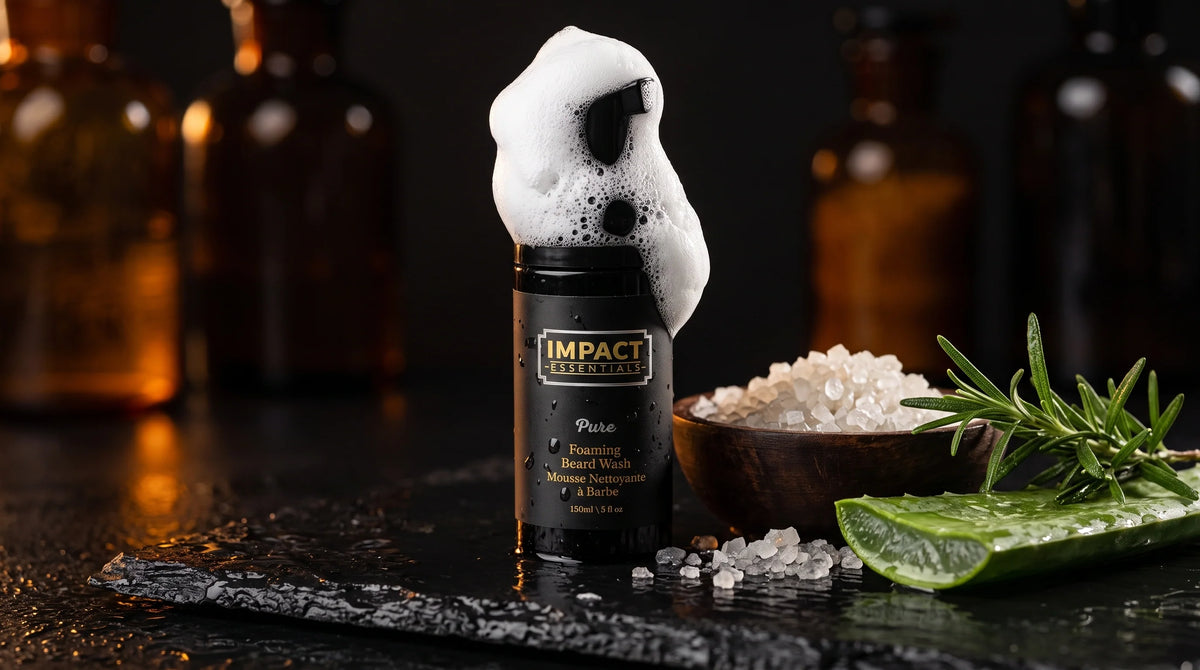
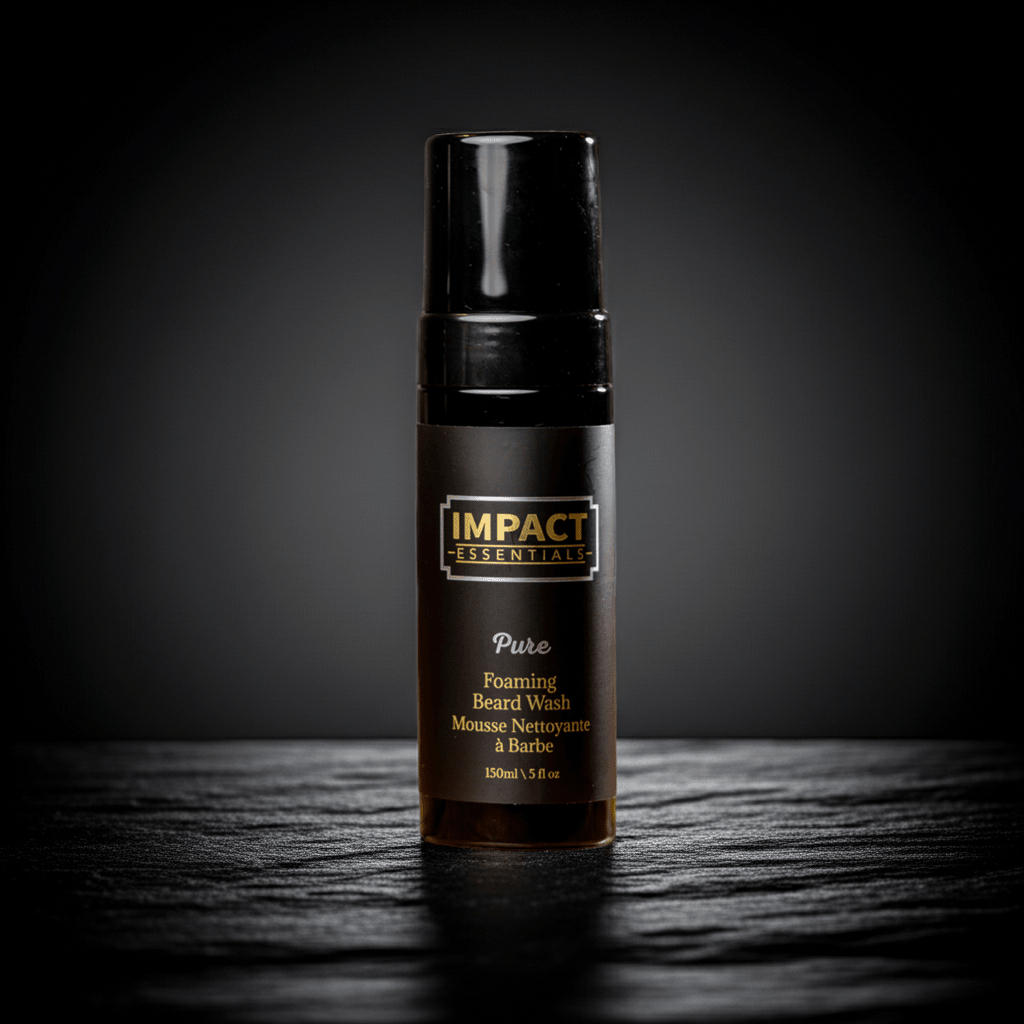
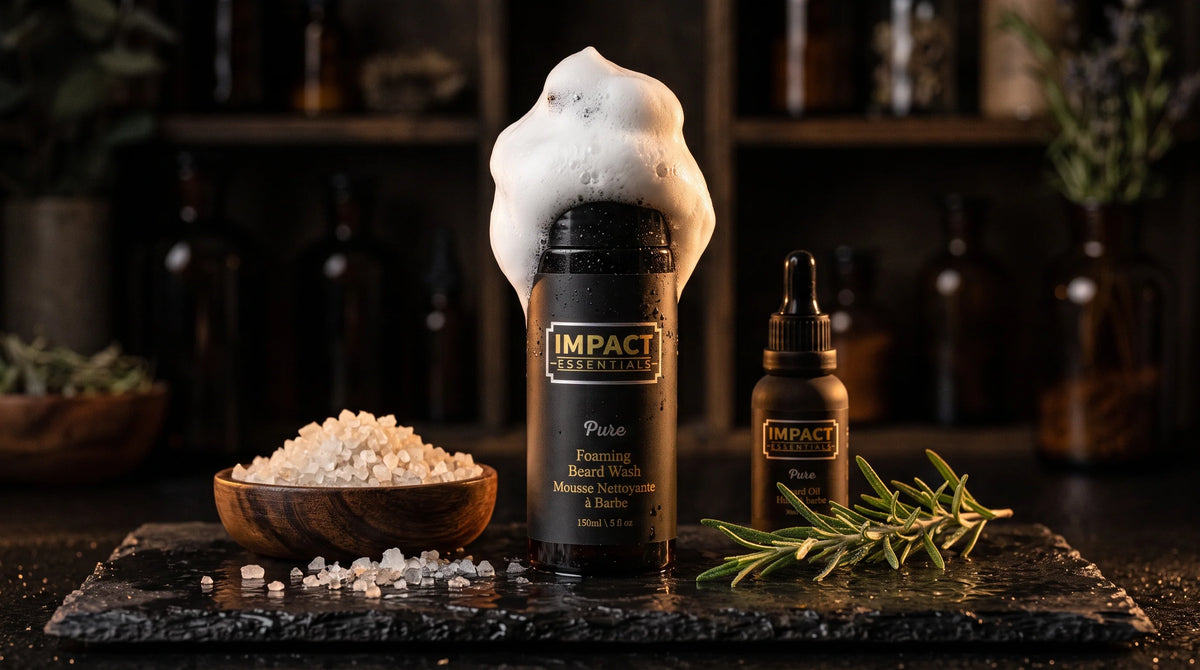
Restoring facial skin requires clean, balanced formulations free of harsh surfactants, synthetic colorants, and heavy pore-clogging waxes. Our Pure Unscented Foaming Beard Wash offers a gentle reset. Combining mild coconut-derived cleansers with pure Dead Sea minerals, aloe vera, and provitamin B5, it purifies congested follicles and soothes sensitive skin without post-wash tightness.
To discover our full range of gentle grooming washes, explore the complete Foaming Beard Wash Collection.
Frequently Asked Questions
How do I know if it's dandruff or dry skin?
Inspect the flake size, color, and dermal sensation. Dry skin produces small, powdery white flakes with tight, rough skin that improves immediately with hydration. Fungal dandruff produces larger, greasy, yellowish flakes accompanied by localized redness, warmth, and persistent itchiness caused by Malassezia yeast.
How to get rid of dandruff on your beard?
To clear fungal beard dandruff, cleanse two to three times weekly using a sulfate-free foaming wash infused with Dead Sea salt to curb yeast proliferation. Follow with fast-absorbing, non-comedogenic liquid wax esters like jojoba oil to hydrate the skin without feeding fungal lipases.
How to moisturize skin under a beard?
Moisturize skin beneath dense whiskers by applying three to four drops of pure botanical oil directly onto damp skin immediately following a lukewarm wash. Part the hair canopy to press the liquid wax esters into the stratum corneum rather than coating only the outer hair fibers.
Can beard oil cure beard dandruff?
Beard oil alone cannot cure fungal beard dandruff. While lightweight jojoba softens whiskers and calms irritation, you must first clear away microbial buildup with a mineral-rich foaming wash to disrupt the yeast's lipid supply.
Can heavy beard oils make fungal dandruff worse?
Yes. Heavy plant oils rich in triglycerides, such as olive or unrefined coconut oil, supply fatty acids that Malassezia yeast feeds on. Coating an active fungal outbreak in dense oils accelerates microbial replication and intensifies flaking.
Does cold winter weather cause beard dandruff?
Cold winter air causes dry skin (xerosis cutis) rather than fungal dandruff. Low humidity and indoor heating sap moisture from the epidermis, creating fine white flakes that subside once natural moisture sealing rituals are restored.
Will shaving my beard make dandruff go away?
Shaving removes the terminal hair canopy, exposing the skin to light and reducing the warm, humid microclimate that favors yeast. However, if the underlying sebum imbalance and epidermal sensitivity remain untreated, flaking persists on clean-shaven skin.
Can diet influence facial flaking?
Yes. Diets high in refined carbohydrates and inflammatory fats can increase systemic sebum secretion. Excess sebum provides elevated concentrations of fatty acids, giving Malassezia yeasts more substrate to consume.
What ingredients should I look for to fight beard dandruff?
Look for gentle cleansers formulated with Dead Sea salt (Maris Sal) to manage yeast balance, aloe vera to calm inflammation, provitamin B5 to rebuild the dermal barrier, and lightweight carrier oils like jojoba and argan that absorb cleanly.