Sulfate Free Beard Wash: The Cleansing Protocol
A distinguished beard requires clean skin underneath. When building an elevated grooming routine, choosing a gentle sulfate free beard wash makes all the difference. Many make the mistake of using standard bar soap or scalp shampoo on their faces. However, harsh commercial detergents strip away your delicate natural oils, leaving your facial hair rough and your skin irritated. Understanding proper facial hygiene begins with choosing plant-based formulas that wash away grime while protecting your skin barrier.
The Chemistry of Surfactants: Why Sulfates Harm Facial Skin
Harsh sulfates strip facial skin by dissolving the intercellular lipid matrix and denaturing stratum corneum keratin. Scalp hair tolerates aggressive anionic detergents like Sodium Lauryl Sulfate (SLS) due to high sebum production. In contrast, facial skin is thinner, has a delicate 4.5–5.5 pH acid mantle, and possesses fewer sebaceous glands, resulting in barrier degradation, accelerated transepidermal water loss (TEWL), and persistent beard itch.
| Surfactant Class | Common Examples | Impact on Skin Barrier | Typical Application |
|---|---|---|---|
| Harsh Anionic | Sodium Lauryl Sulfate (SLS), Sodium Laureth Sulfate (SLES) | High lipid stripping; denatures stratum corneum proteins; causes erythema. | Commercial scalp shampoos, industrial degreasers |
| Gentle Non-Ionic | Coco-Glucoside, Decyl Glucoside | Zero charge; preserves lipid bilayer; effectively lifts debris without stripping. | Facial cleansers, natural beard washes |
| Mild Amphoteric | Cocamidopropyl Betaine | Secondary surfactant; mitigates irritation; enhances foam stability. | Sensitive-skin formulations |
To understand why your face feels tight after washing, you must examine how commercial soaps work. Most generic shampoos rely on harsh detergents to create high lather volume, but they remain overly aggressive for delicate facial tissue. Scalp skin is thick and naturally oily, while the skin beneath your cheeks and jawline requires calibrated gentleness.
When harsh sulfates touch your face, they do not just wash off surface particulate. They dissolve your natural lipid matrix and disrupt skin proteins, leading to redness, stinging, and persistent tightness. Choosing gentle plant cleansers like coco-glucoside and betaine ensures that you lift away impurities cleanly while safeguarding the moisture barrier.
Scientific research confirms this physiological reality. A clinical review in Dermatology Research and Practice — Cleansing Formulations That Respect Skin Barrier Integrity (Walters et al.) — demonstrates that harsh anionic sulfates compromise stratum corneum integrity and strip vital intercellular lipids. In contrast, gentle amphoteric and non-ionic surfactant matrices keep the skin barrier resilient while preserving essential hydration.
Beard Dandruff vs Dry Skin: Solving Flakes at the Root
Beard flakes stem from two biologically distinct conditions: Transepidermal dehydration (dry skin) or a microbiome imbalance fueled by Malassezia yeast (seborrheic dermatitis). Using standard commercial soap worsens both conditions by either stripping epidermal moisture or triggering reactive sebum overproduction.
| Diagnostic Trait | True Dry Skin (Xerosis) | Beard Dandruff (Seborrheic Dermatitis) |
|---|---|---|
| Flake Appearance | Small, dry, powdery white flakes | Large, thick, oily, yellowish scales |
| Underlying Cause | Stripped lipid barrier, dry indoor air, excessive water temperature | Malassezia yeast overgrowth metabolizing excess sebum |
| Skin Sensation | Tightness, surface roughness, mild stinging | Intense pruritus (itching), localized redness, inflammation |
| Impact of Harsh Cleansers | Accelerates transepidermal water loss (TEWL) | Triggers rebound sebum production that feeds active yeast |
| Corrective Protocol | Non-ionic surfactant wash + lipid-replenishing oil | Balanced botanical wash + sebum regulation |
If you battle sensitive or reactive skin, our guide to a Sensitive Skin Beard Care Routine shows how gentle cleansing calms inflammation without causing rebound flaking.

Active Botanical Cleansing: Nature Meets Science
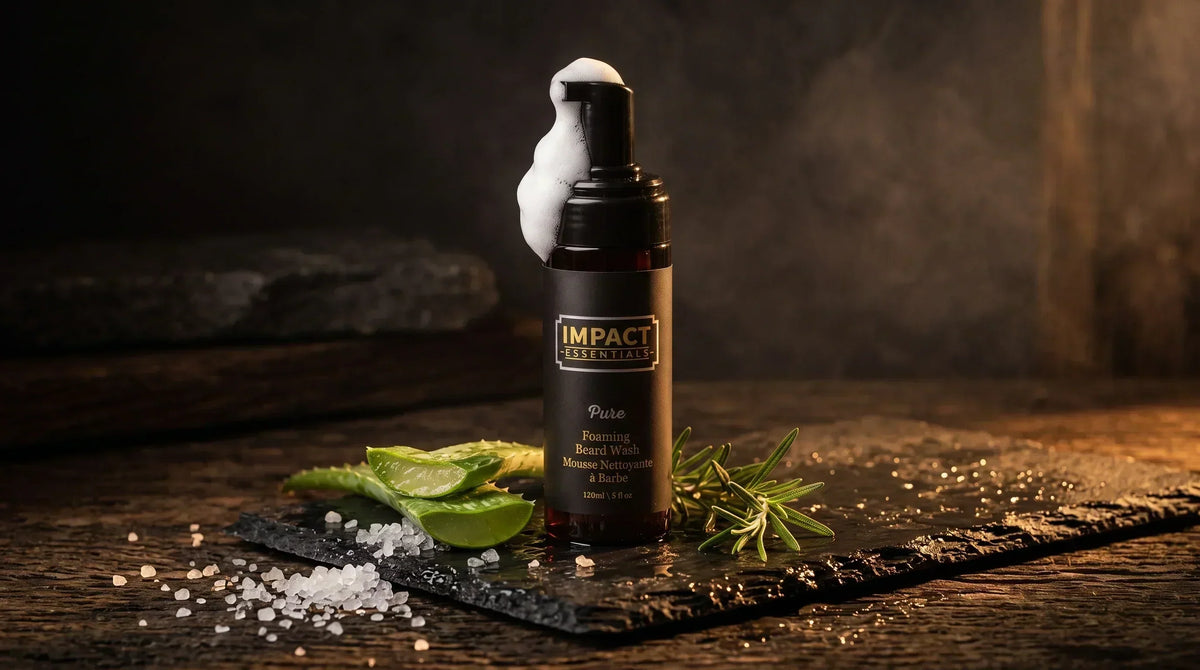
A high-performance beard wash relies on purposeful botanical actives that cleanse and condition simultaneously. Rather than synthetic thickeners or drying foam boosters, purposeful formulations harness clean botanical extracts:
-
Coco-Glucoside & Betaine (Coco-Glucoside & Cocamidopropyl Betaine)
Mild plant cleansers derived from coconut and fruit sugars that generate dense, velvety foam without compromising the skin's lipid envelope.
-
Dead Sea Salt Minerals (Maris Sal)
Abundant in magnesium, potassium, and calcium to purify sub-beard pores and support a balanced dermal microflora.
-
Hydrolyzed Jojoba Protein (Hydrolyzed Jojoba Protein)
Adheres to damaged hair fibers, filling cuticular irregularities to lock in structural moisture and soften coarse stubble.
-
Pro-Vitamin B5 (D-Panthenol)
Penetrates the hair cortex and underlying follicle to calm dermal irritation, reduce brittleness, and enhance elasticity.
-
Aloe Vera Leaf Juice (Aloe Barbadensis Leaf Juice)
Delivers immediate cooling comfort to soothe sensitive tissue and hydrate freshly cleansed skin.
To understand how tailored formulations elevate your daily outcome, explore our perspective in Beard Wash: Why Your Daily Routine Demands One. Clean ingredients work with your body to keep facial hair soft and manageable.
The Optimal Beard Cleansing Protocol: Step-by-Step
Cleanse coarse facial hair without compromising the epidermal barrier using this calibrated sequence:
-
Calibrate Water Temperature (36°C–38°C / 98°F–100°F)
Wet the facial hair thoroughly with lukewarm water. Water above 40°C (104°F) melts natural protective lipids and forces hair cuticles wide open, precipitating dryness.
-
Dispense 2 to 3 Pumps of Foaming Cleanser
Deposit pre-aerated foam into damp palms. Instant micro-foam ensures smooth, uniform surfactant spread without requiring mechanical friction across dry fibers.
-
Target the Sub-Beard Epidermis
Massage the lather through the whiskers directly onto the underlying skin using the pads of your fingertips in controlled, circular motions for thirty seconds.
-
Execute a Low-Pressure Rinse
Flush the beard completely with lukewarm water until zero surfactant residue remains on the skin bed or along the hair shaft.
-
Pat Dry and Seal (Within 60 Seconds)
Gently press the beard damp with a clean towel—avoid aggressive rubbing. Apply natural beard oil immediately to trap residual hydration in the hair cortex.
Following your rinse, your beard is ideally prepped to receive rich botanical nourishment. Integrating our structured Beard Hydration Routine Protocol locks in vital moisture for all-day comfort.
Pure Dermal Cleansing
At IMPACT Essentials, we believe facial care should remain uncompromisingly clean, functional, and sensory. Our formulations eschew artificial dyes, harsh sulfate detergents, and synthetic thickeners in favor of authentic performance.
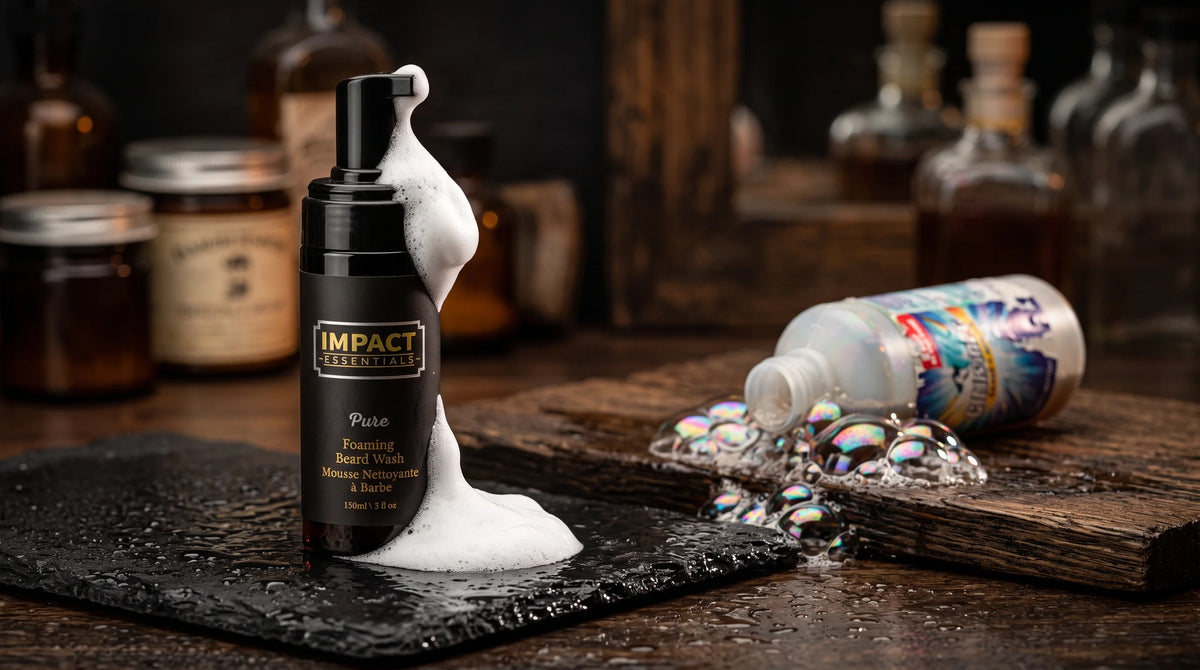
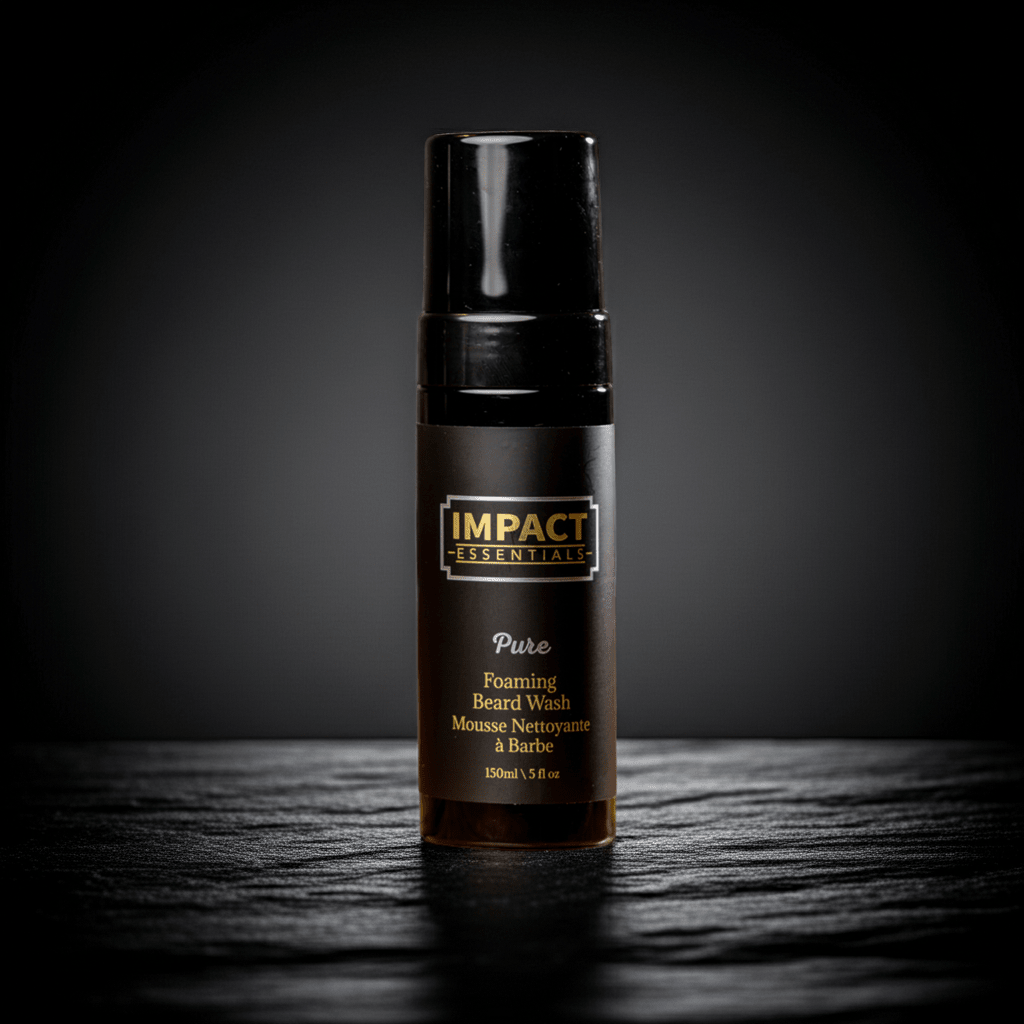
The Pure Unscented Foaming Beard Wash represents this discipline. Crafted specifically for reactive skin and sensitive facial hair, it unifies gentle coconut-derived cleansers with raw Dead Sea minerals and provitamin B5 to cleanse cleanly without residue or tightness. Explore the complete spectrum in our Foaming Beard Wash Collection to refine your personal ritual.
Frequently Asked Questions
Can you use regular hair shampoo on your beard?
No. Scalp shampoos rely on aggressive anionic surfactants engineered for thicker, oilier scalp tissue. On facial skin, these detergents strip the lipid barrier, spike skin pH, and cause severe follicular irritation and hair brittleness.
How often should you use a sulfate free beard wash?
Two to three times per week is the clinical baseline for most routines. This cadence clears environmental residue, dead skin, and sweat without disrupting the acid mantle. On alternate days, a warm water rinse is sufficient.
Can using the wrong soap cause beard dandruff?
Yes. Harsh bar soaps disrupt the skin's acid mantle, triggering surface xerosis (dry flakes) while prompting sebaceous glands into reactive overdrive—fueling Malassezia yeast proliferation.
Does a gentle foaming cleanser still clean effectively?
Yes. Gentle non-ionic cleansers derived from coconut and plant sugars lift particulate matter and excess oils into a dense micro-lather without hydrolyzing epidermal proteins or stripping moisture.
What water temperature is best for washing facial hair?
Lukewarm water between 36°C and 38°C (98°F–100°F) is optimal. Excessively hot water dissolves essential surface sebum and flares cuticular scales, while cold water fails to dissolve grime and sebum effectively.
Should you apply beard oil right after washing?
Yes. Always apply beard oil immediately after washing while the beard is slightly damp. This traps surface moisture inside the cortex and reinforces the lipid layer before dehydration occurs.