
Jojoba Oil vs Argan Oil for Beards: Which Works Better?
If you ask ten different beard care blogs whether Jojoba Oil or Argan Oil is better for your beard, you will get ten different answers. Half will tell you Jojoba is the undisputed king. The other half will swear by Argan.
The truth comes down to a dermatological reality: neither oil is universally better. They solve two completely different problems in beard care because of their fundamental molecular structures. Choosing between them isn't about which oil is superior. It's about understanding what your beard and skin are actually starving for.
The Molecular Breakdown: Skin vs Hair
To understand why these oils behave so differently, you have to look at what they are doing on a microscopic level.
Jojoba Oil: The Skin Specialist
Unrefined Golden Jojoba isn't actually a true triglyceride oil. It is a liquid wax ester. Because its molecular structure mirrors human sebum almost identically, your skin recognizes it instantly.
Jojoba works best for short beards, stubble, beard itch, beard dandruff (beardruff), and clogged pores. Rather than sitting on top of the skin, Jojoba penetrates the dermis to balance sebum production. This soothes the dry, flaky skin beneath your beard without clogging hair follicles.
Argan Oil: The Hair Whisperer
Cold-pressed Extra-Virgin Argan Oil is a dense triglyceride rich in essential fatty acids, Vitamin E, and plant sterols.
Argan works best for long, thick, wiry, brittle, or unruly facial hair. It targets the hair shaft itself by coating coarse strands, filling in micro-cracks in the cuticle, and restoring flexibility to dry, frizzy hair that snaps easily—a vital step when adjusting your routine for beard care for harsh cold climates.
Why Single-Oil Products Miss the Mark
When browsing beard products, you will notice many commercial brands use 100% Jojoba or 100% Argan. While single-ingredient oils aren't bad, they force you to choose between caring for your skin or caring for your hair.
If you have a short beard and use pure Argan, your beard hair will feel soft, but the skin underneath might remain dry and itchy. Conversely, if you have a long, heavy beard and use pure Jojoba, your skin will feel balanced, but your coarse end-strands won't get enough weight and nourishment to stay tamed.
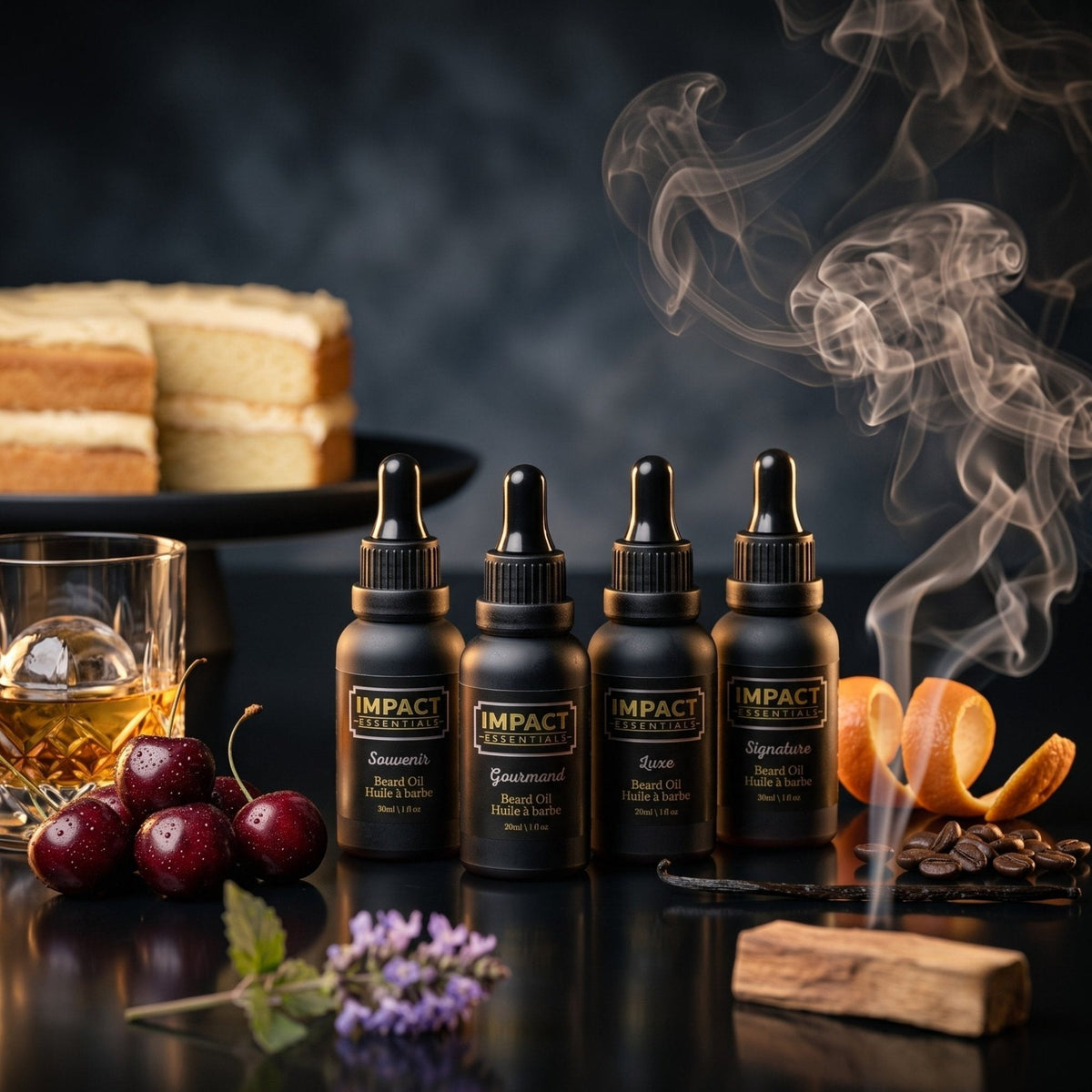
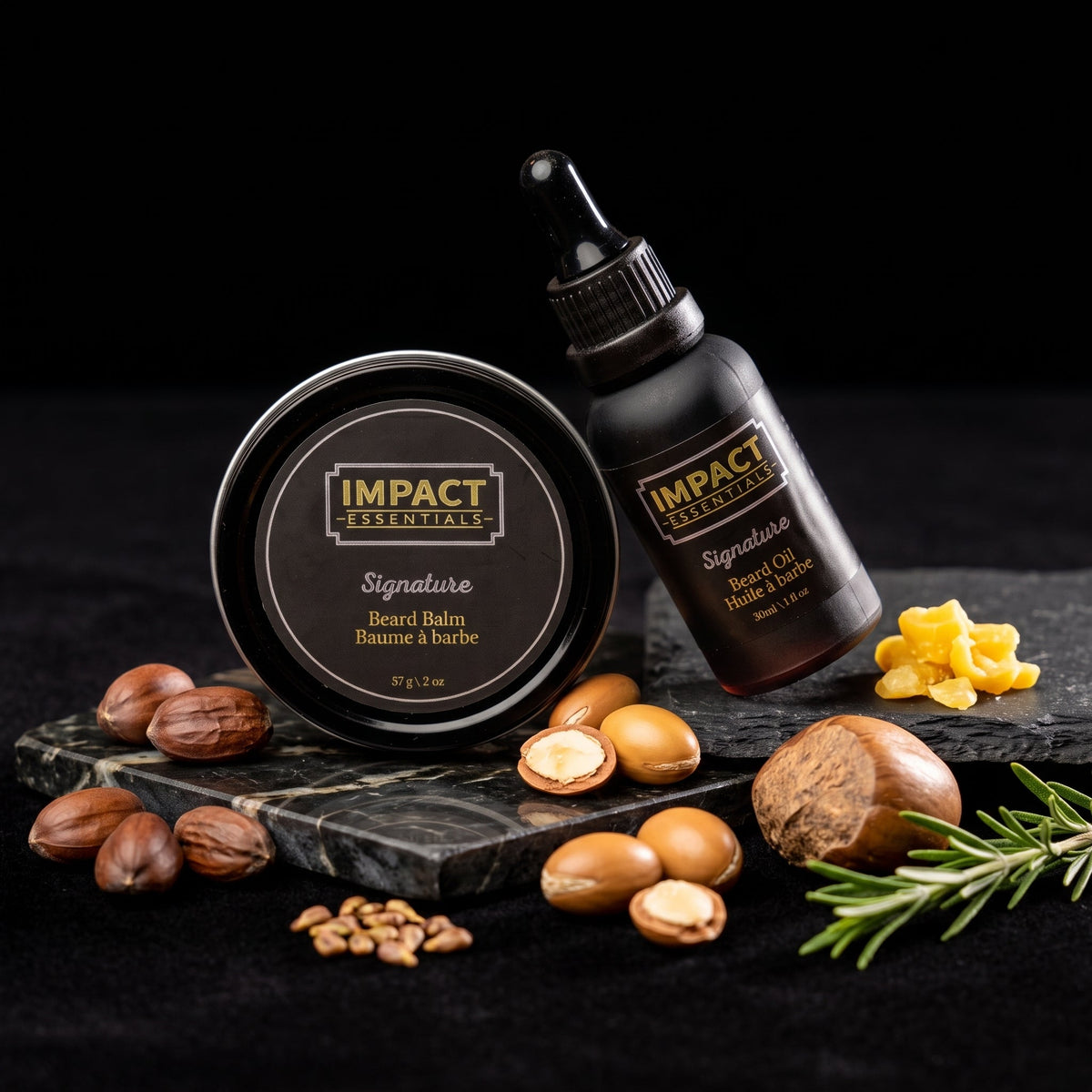
Combining both raw botanical ingredients creates a universal formula. The Jojoba balances the dermis, while the Argan treats the hair strand. To experience how these two oils perform when crafted together in precise ratios, explore our premium beard oil collection to find the right scent profile for your routine.
The Master Application Technique: Up and Down
Even the best formula will only perform at half capacity if applied incorrectly. The biggest mistake men make isn't choosing the wrong product. It's simply slapping oil onto the outside of their beard and walking away. Doing this leaves the Jojoba sitting uselessly on top of hair strands while the skin starves underneath.
To get maximum benefits from a blended oil, use this exact two-phase technique:
-
Pour a few drops into your palm and rub your hands together to warm the botanical matrix.
-
Work your hands upward underneath your beard, pressing firmly against your chin, jawline, and cheeks. This delivers the lightweight Jojoba directly to the dermis where it belongs.
-
Sweep your hands downward over the outer surface of your beard. This allows the denser Argan to coat, soften, and align the hair strands.
Behind the Batch: Scenting Raw Botanicals
Working with unrefined, live botanicals requires precision during formulation. Raw, unrefined Argan carries a distinct earthy, nutty aroma, while unrefined Jojoba remains nearly odorless.
Unrefined Jojoba acts as a natural scent anchor. Because it is chemically a wax matrix, fragrance and essential oil molecules bind directly to it. This slows down the evaporation rate, allowing top notes to linger naturally rather than vanishing in twenty minutes.
Scenting Argan presents a unique challenge. Light, delicate notes like citrus or soft florals get muddied by Argan’s natural nuttiness. Trying to overpower it with excess fragrance risks irritating the dermis, which is why choosing a formulated beard oil for sensitive skin is critical if you are prone to redness. Instead of heavy synthetic perfumes, deep, warm, rich notes—like fresh coffee, dark vanilla, rich tobacco, or cedarwood—use Argan's natural aroma as a rich base layer. This enhances the fragrance rather than fighting it.
Once blended, a quality beard oil must cure for 48 to 72 hours. This resting period allows the scent molecules to fully integrate into the Jojoba wax matrix and harmonize with the Argan, smoothing out sharp edges into a cohesive profile.
Label Warning: The Moroccan Oil Trap
When shopping for beard oil, the single biggest red flag on an ingredient label is the term "Moroccan Oil."
Moroccan Oil is often a commercial product name or marketing term for a blend packed with synthetic silicones like dimethicone or cyclopentasiloxane. While silicones provide an instant, slick feel, they coat the hair strand in an impermeable plastic-like barrier. This barrier locks out actual moisture and prevents beneficial botanical oils from penetrating. Over time, silicones build up, leaving your beard drier and more brittle than when you started.
Always check the back of the bottle. You want to see Argania Spinosa Kernel Oil (pure Argan) and Simmondsia Chinensis Seed Oil (pure Jojoba), not a cocktail of synthetic fillers. If you want a deeper dive into evaluating ingredient labels, read our breakdown on beard oil quality vs cheap filler oils to see what separates true premium products from commercial shortcuts.

Frequently Asked Questions
Does Jojoba Oil promote beard growth?
Jojoba Oil does not directly alter genetics or trigger new hair follicles. However, by unclogging blocked pores and eliminating the dry skin that causes breakage, it creates the optimal environment for uninhibited, natural hair growth.
Is Argan Oil good for short beards?
Yes, but it should be paired with Jojoba. Argan alone on a short beard can feel slightly heavy on the skin if applied in excess, whereas a Jojoba-Argan blend keeps both the skin and short bristles hydrated.
Will Jojoba or Argan oil clog my pores and cause acne?
Pure Golden Jojoba has a very low comedogenic rating and closely mimics natural skin oils, meaning it rarely clogs pores. Pure Argan Oil has a rating of zero. Neither oil will clog pores unless mixed with cheap carrier oils or synthetic silicones.
How often should I apply a Jojoba-Argan beard oil?
For most men, once daily after a warm shower is ideal. Damp hair cuticles and open skin pores absorb the botanical blend far more efficiently.
Can I use pure Argan Oil on my beard every day?
You can, but using pure Argan without Jojoba means your underlying skin isn't receiving the specific wax-ester benefits needed to balance sebum production long-term.
What color should high-quality Jojoba and Argan oils be?
Unrefined Jojoba should be a clear, golden-yellow liquid. Cold-pressed, unrefined Argan Oil ranges from warm yellow to deep amber. Pale or clear versions are usually heavily refined or bleached, stripping away vital nutrient contents.
Does Argan oil solidify in cold temperature?
Yes. Unrefined Argan oil is rich in natural fatty acids and may turn cloudy or slightly viscous if stored in a cool room. It naturally warms back up and clears once held in your palms.
Why does my beard feel greasy even after using pure oils?
Greasiness is almost always caused by over-application or applying oil to a soaking-wet beard. Towel-dry your beard so it is slightly damp, and start with three to five drops depending on length.
Can I apply beard oil before using a blow dryer?
Yes. Argan Oil has natural heat-protective properties that help shield hair cuticles from high thermal exposure when styling with a hair dryer or heated comb.
How long does a bottle of unrefined Jojoba and Argan blend last?
Because Jojoba is a wax ester immune to rapid oxidation, a high-quality blend stored in a dark glass bottle out of direct sunlight typically maintains full potency for twelve to twenty-four months.
Ready to upgrade your daily grooming routine with pure, cold-pressed botanicals? Explore our premium natural beard oil collection to find the perfect blend for your skin and hair type.