Article: Shea Butter for Beard Care: Soften Coarse Hair
Shea Butter for Beard Care: Soften Coarse Hair
Dermatological Formulations & Rituals
Cultivating a dense, full beard often reveals a challenging texture obstacle: wiry, scratchy facial hair that resists basic conditioning. Because facial whiskers possess an irregular elliptical shape and a thicker cuticular layer than scalp hair, standard water-based moisturizers evaporate before penetrating the cortex. Incorporating raw, unrefined shea butter provides the high-density lipid architecture required to coat coarse fibers, lock in vital moisture, and protect underlying skin from chronic dryness.
Key Takeaways: Botanical Lipid Mechanics
- Stearic-Oleic Equilibrium: Raw shea butter delivers 40% to 55% oleic acid to deeply soften the hair cortex, paired with 35% to 45% stearic acid to form an elastic barrier against moisture loss.
- Anti-Inflammatory Triterpenes: Bioactive plant compounds, including lupeol and amyrin, soothe underlying facial skin and mitigate itchy epidermal tension beneath dense growth.
- Babassu Lipid Integration: Formulating shea alongside cold-pressed babassu oil introduces low-molecular lauric triglycerides that melt on skin contact, ensuring rapid absorption without greasy buildup.
- Clean Non-Comedogenic Hydration: Unrefined natural plant butters maintain a zero rating on the comedogenic scale, delivering deep cuticular conditioning without clogging facial pores.

How Does the Fatty Acid Profile of Shea Butter Soften Coarse Beards?
Raw shea butter softens coarse whiskers by deploying high concentrations of stearic and oleic fatty acids directly onto the hair fiber. While stearic acid constructs an external lipid shield to prevent trans-epidermal water evaporation, oleic acid slips between cuticular layers to hydrate dry cortex cells. This targeted lipid delivery restores natural hair elasticity within a single nocturnal absorption cycle.
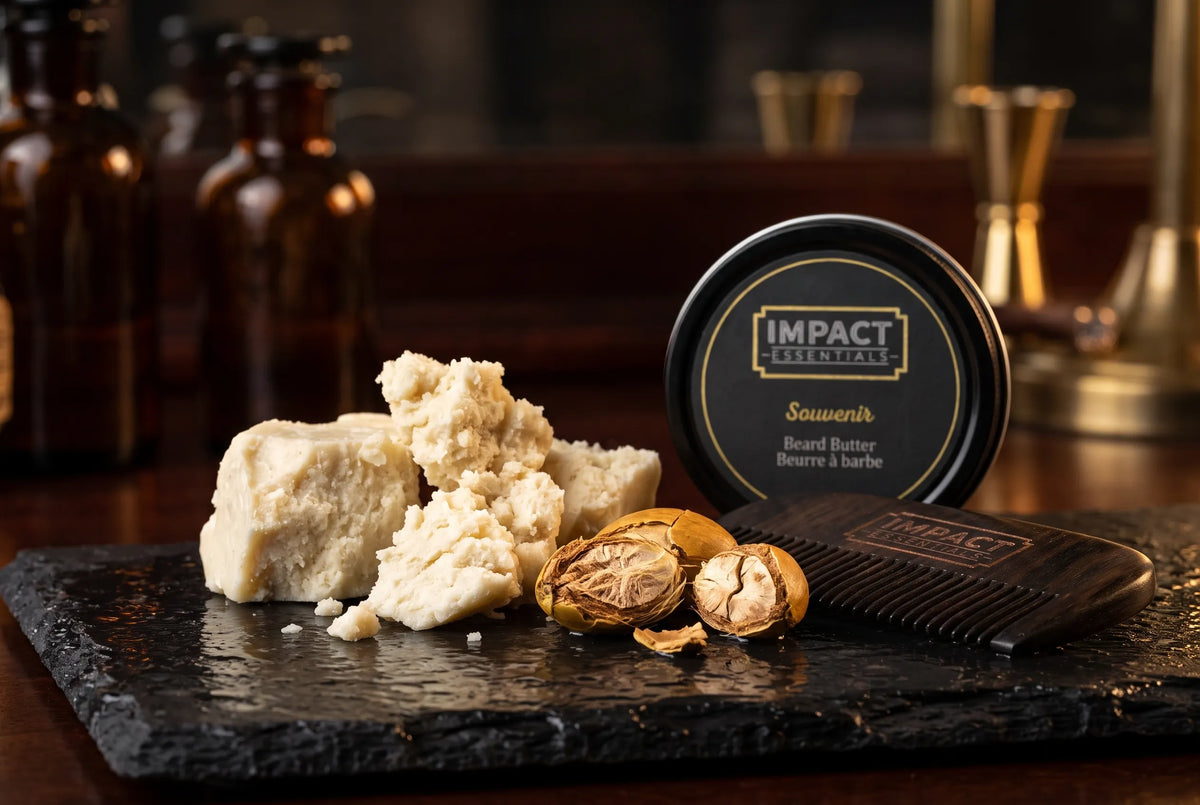
Harvested from the fruit kernels of the African shea tree (Vitellaria paradoxa), unrefined shea butter provides a dense, buttery consistency that melts at body temperature. Coarse facial whiskers often feel brittle because daily washing and exposure to cold winds strip away the modest sebum generated by facial glands. When this natural lipid layer degrades, cuticular scales flare outward, creating rough friction whenever hairs touch skin.
Beyond basic triglycerides, cold-pressed shea contains restorative cinnamic acid esters and triterpenes. According to a landmark study published in the Journal of Oleo Science examining triterpene acetates from shea fat, compounds like lupeol, alpha-amyrin, and butyrospermol exhibit pronounced anti-inflammatory activity. These botanical actives calm redness across the jawline while fortifying the fragile epidermal barrier under heavy whiskers. Integrating this rich butter into your regular Beard Hydration Routine Protocol helps maintain continuous moisture balance across changing seasons.
| Fatty Acid Profile | Carbon Chain Class | Cuticular Absorption Depth | Primary Grooming Function |
|---|---|---|---|
| Stearic Acid (C18:0) | Long-chain Saturated | Surface / Cuticle Seal | Locks in water; buffers against winter wind |
| Oleic Acid (C18:1) | Monounsaturated Omega-9 | Intermediate Cortex | Restores core flexibility; minimizes snapping |
| Lauric Acid (C12:0) | Medium-chain Triglyceride | Deep Cortex Core | Rapid low-molecular hydration without weight |
| Palmitic Acid (C16:0) | Saturated Fatty Acid | Outer Epicuticle | Smooths down lifted scales for velvet glide |
Why Combine Babassu Oil with Shea Butter for Beard Conditioning?
Pairing raw shea butter with virgin babassu oil solves the dense viscosity challenge of unrefined tree fats. While pure shea provides intense, long-lasting occlusive protection, babassu introduces light lauric triglycerides that melt instantly at human body temperature. This harmonious synergy produces a smooth, lightweight butter that glides through thick whiskers without leaving an oily residue behind.
Extracted from wild palm nuts in South America (Orbignya oleifera), babassu possesses a unique fatty acid profile dominated by lauric acid (around 50%) and myristic acid (around 20%). Because these medium-chain fatty acids have a much smaller molecular footprint than stearic acid, they slip rapidly beneath lifted cuticle plates to moisturize dry hair strands from the inside out.
"True grooming luxury resides in molecular harmony. By tempering the deep, protective richness of unrefined African shea with wild babassu lipids, coarse whiskers absorb deep moisture while maintaining a refined, touchable feel."
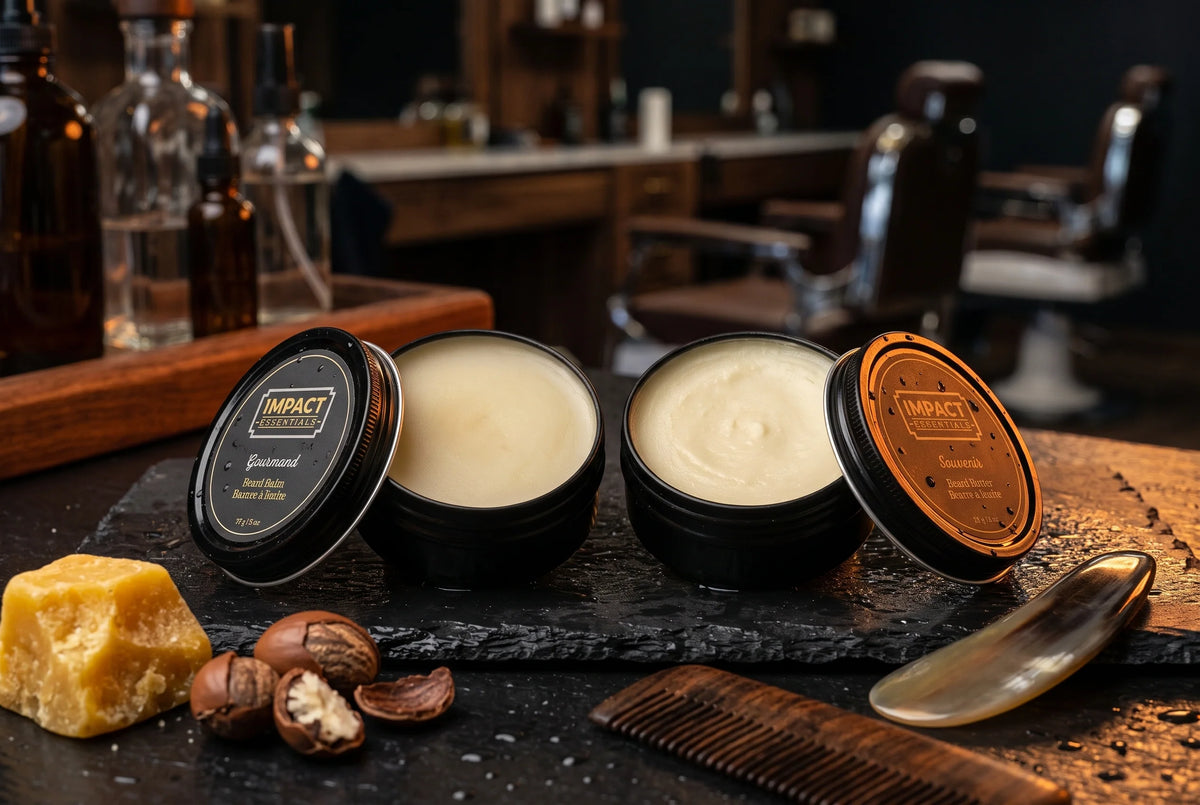
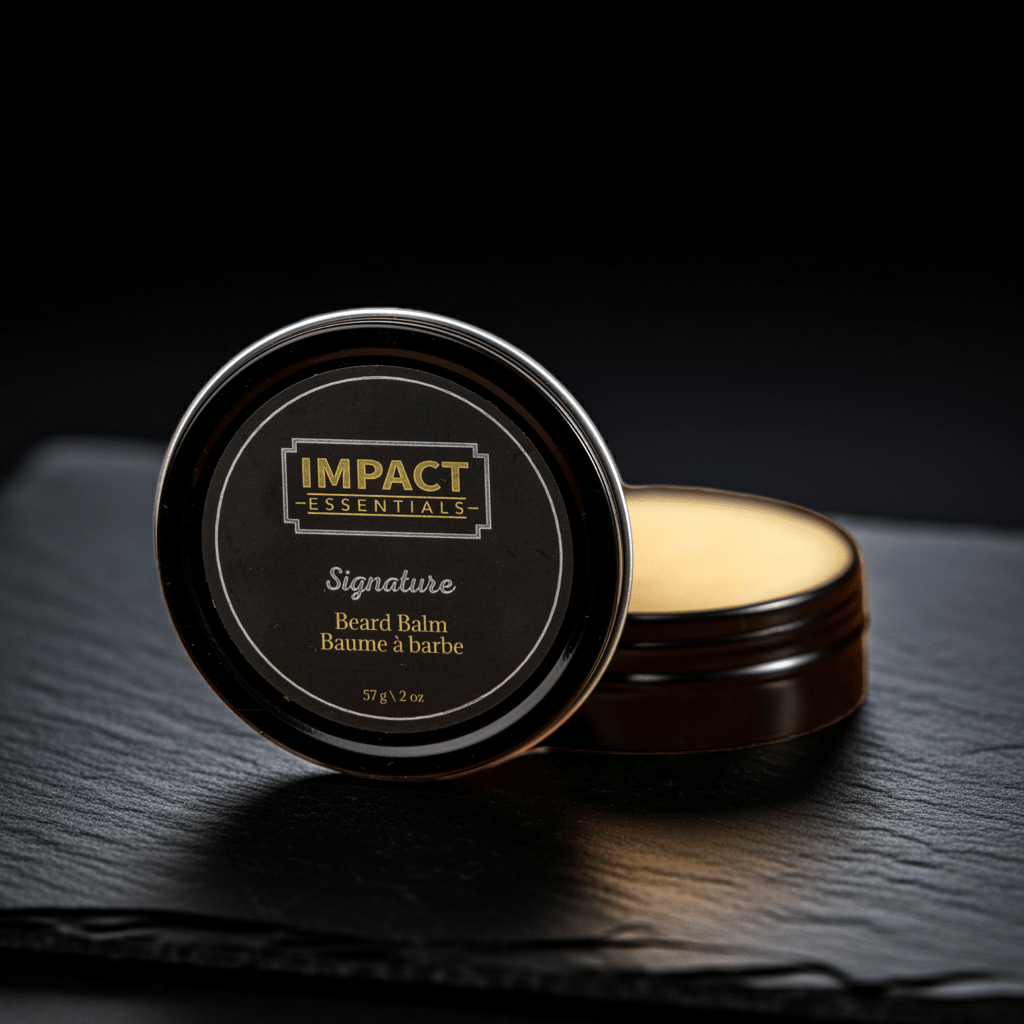
In our expertly curated Signature Beard Butter, we unite unrefined ivory shea with cold-pressed babassu, pure yellow beeswax, and nourishing grape seed oil. This balanced formula glides effortlessly through coarse beards, giving whiskers a natural, healthy luster without leaving greasy stains on shirt collars or pillows.

Which Shea Butter Products Work Best for Coarse Beard Texture?
The most effective shea butter products for coarse beards utilize pure, unrefined Grade-A ivory shea blended with complementary botanical lipids. Avoid deodorized, chemically bleached white butters and formulas containing synthetic silicones or petroleum wax. These industrial shortcuts create a plastic-like film over hair strands that repels natural moisture, leaving whiskers increasingly dry and fragile over time.
When exploring facial hair conditioners, identifying honest, high-performance formulations is vital. Understanding the key differences between real plant nutrients and cheap drugstore substitutes protects your beard investment:
- Unrefined Ivory Shea vs. Chemically Bleached White Shea: Raw shea retains its distinctive ivory-to-pale-yellow hue, soft nutty scent, and full spectrum of vitamins A, E, and plant triterpenes. Industrial white shea undergoes chemical hexane extraction and high-heat deodorization, which strips away the active healing components.
- Plant-Derived Lipids vs. Synthetic Silicones: Commercial drugstore balms frequently rely on dimethicone or cyclopentasiloxane to create artificial slickness. While silicones offer a brief illusion of softness, they accumulate along the hair shaft and block water absorption until stripped away by harsh sulfates.
- Balanced Soft Butters vs. Stiff Styling Waxes: As detailed in our comprehensive Beard Butter vs Balm Guide, heavy wax formulations provide structural hold for daytime styling. In contrast, evening conditioning calls for breathable, lipid-dense butters that sink deep into hair fibers overnight.
Selecting consciously crafted blends from our Beard Butters Collection ensures your beard receives clean, natural nutrients that strengthen wiry facial hair week after week.
How Do You Apply Shea Butter to Soften a Dry Beard?
To soften a dry beard effectively, apply a dime-sized amount of shea butter onto clean, towel-damp facial hair. Warm the butter between your hands until it melts into a smooth oil, then massage it upward from the base of the neck into the roots. Finally, smooth your palms downward and comb through with a wooden comb to coat every hair evenly.
Following a deliberate, step-by-step evening ritual guarantees that rich botanical lipids penetrate the hair cortex rather than remaining on the surface:
- Cleanse with Warm Water: Rinse your face and beard with lukewarm water to clear away ambient dust and relax tight cuticle layers. Gently pat with a cotton towel until hair is slightly damp but not dripping wet.
- Thermal Emulsification: Extract a small portion of butter using the back of your thumbnail. Rub your palms together for five to ten seconds, allowing your natural body heat to transform the semi-solid butter into a warm, clear oil.
- Root-to-Tip Distribution: Press your oiled palms against your neck and stroke upward toward the cheeks, ensuring the skin under the beard receives direct nourishment. Then, run your fingers downward through your beard to coat the coarse mid-lengths and tips.
- Even Dispersion: Guide a smooth, wide-tooth wooden comb through the beard. Wooden teeth glide through thick growth without generating static friction, distributing the plant lipids uniformly across every whisker.
Adopting this sequence alongside our dedicated Deep Conditioning Beard Butter Protocol transforms stiff, coarse whiskers into a supple, touchable beard within days.
Frequently Asked Questions
Which shea butter products work best for beards?
The most effective shea butter products for beards use unrefined, cold-pressed Grade-A ivory shea combined with lighter botanical oils like babassu and grape seed. Avoid bleached white shea, petroleum fillers, and heavy synthetic silicones like dimethicone, which form a moisture-repellent coating over the hair shaft.
Is shea butter good for beard growth?
Shea butter supports healthy beard growth indirectly by fortifying the follicle environment. Its oleic and stearic acids reduce mechanical breakage and split ends, while anti-inflammatory triterpenes calm the underlying skin, allowing whiskers to achieve their maximum terminal length without premature snapping.
How do I use shea butter to soften my beard?
To soften coarse whiskers, warm a dime-sized portion of shea butter between your palms until it liquefies into a golden oil. Massage upward from the neck into the roots, smooth downward over the surface, and distribute evenly through the lengths using a wide-tooth wooden comb on clean, towel-damp hair.
Can shea butter replace beard oil in my daily routine?
Shea butter and beard oil serve complementary roles rather than replacing one another. Fast-absorbing beard oil nourishes the skin and follicular base beneath short or medium growth, whereas shea butter acts as a deep conditioning occlusive seal on the coarse outer cuticles of the beard shaft.
Will using shea butter for beard care clog pores or cause acne?
Raw, unrefined shea butter has a zero comedogenic rating, meaning it does not clog pores. When balanced with lightweight, high-spreadability oils like babassu and grape seed, it hydrates coarse hair without triggering blemishes, folliculitis, or residue along the jawline.
How often should I apply shea butter to my beard?
Apply shea butter once daily or three to four nights per week, depending on beard density and environmental dryness. Coarse, thick facial hair benefits most from an evening application, allowing lipid structures to absorb thoroughly overnight without environmental interference.
Can I use raw shea butter on a short stubble beard?
Yes, applying a small amount of shea butter to short stubble softens sharp whisker edges created by razor trimming. It calms razor irritation, hydrates the epidermal barrier, and reduces early-stage itching as new growth emerges.
Why is babassu oil considered superior to coconut oil for beards?
Babassu oil shares the high lauric acid concentration of coconut oil but features a lighter molecular profile that absorbs quickly with a non-greasy, semi-matte finish. It avoids the heavy residue and potential comedogenic pore-clogging risks associated with coconut oil on facial skin.