
Is Baby Oil Good for Your Beard? The Truth Revealed
When building a daily grooming ritual, quick fixes often lead men into bad habits. Many men wonder: is baby oil good for your beard when facial hair feels dry and scratchy? Baby oil sits in many homes, known as a gentle product for soft skin. Yet facial skin and thick beard whiskers have unique needs that baby oil cannot meet. Building an effective Beard Hydration Routine means using pure plant oils that feed your skin rather than coating it with mineral oils.

The Real Difference: Mineral Oil vs Plant Oils
To understand the problem, you must look at what baby oil is made of. Most baby oil is almost pure mineral oil, a clear liquid made from petroleum. It has large molecules that cannot sink into your skin or hair cuticles. Instead of feeding your whiskers from within, mineral oil sits like plastic wrap over your face.
Real beard oils use cold-pressed plant oils from seeds and nuts like jojoba, argan, and sweet almond. Jojoba oil is very close to your skin's natural sebum. When you rub plant oils into your beard, they slip right into hair cuticles and pores. When comparing mineral oil vs beard oil, plant oils repair your lipid barrier, while mineral oil just traps dirt on top.
Medical research confirms this major difference in skin health. A review in Pediatric Health, Medicine and Therapeutics / Taylor & Francis — Skin Care Practices and Barrier Function shows that plant oils with linoleic and oleic acids restore the skin barrier, while mineral oils only act as passive shields that never absorb into skin cells. This is why cheap petroleum oils cannot support healthy beard growth.
Clogged Pores and Beard Acne
The biggest danger of using baby oil on your face is clogged pores. The oil glands under your beard make natural sebum every day to keep hair soft. When you put mineral oil on your face, you seal those pores shut. Dead skin cells, sweat, and dirt get trapped under that heavy film.
This trapped oil creates a home for bad bacteria, leading to red bumps, blackheads, and painful beard pimples. The problem of comedogenic mineral oil pores makes baby oil risky for any man prone to breakouts. To see how clean formulas avoid cheap fillers, read our guide on Is Beard Oil Worth the Money? Quality vs Fillers for the honest facts on grooming oils.
The Dryness Trap: Why Baby Oil Makes Hair Brittle
Men often try baby oil because it gives whiskers an instant shine. But a few hours later, the beard feels stiffer and more dry than before. Why does this happen? Mineral oil has zero vitamins, zero fatty acids, and zero proteins. It cannot repair split ends or nourish hair fibers.
Because mineral oil repels water, it stops moisture in the air from reaching your hair. Over time, whiskers under that film dry out completely. The hair loses stretch and snaps easily when you brush it. If you deal with dry, flaking skin under your whiskers, our Sensitive Skin Beard Care Routine shows how light plant oils give deep comfort without suffocating your face.

Fake Fragrance and Skin Itch
Another hidden problem in baby oil is synthetic perfume. That sweet baby scent is made for infant skin, not for men with thick facial hair. When mixed with sweat on a man's warm jawline, fake scents often trigger red spots, burning, and strong itching.
When short whiskers curl back into angry skin, the urge to scratch becomes hard to resist. To fix facial itch at the source, read our report on Does Beard Oil Really Stop Itching and Flakiness? to see how clean plant oils calm irritation. Pure cold-pressed oils soften hair without stinging your face.
The Better Choice: Pure Plant Oils
Good grooming means using light plant oils crafted for thick facial hair. High-end beard oils use cold-pressed carrier oils that soak into skin in seconds, leaving a clean matte feel. Your collars stay clean, your whiskers feel soft, and your skin breathes with ease.
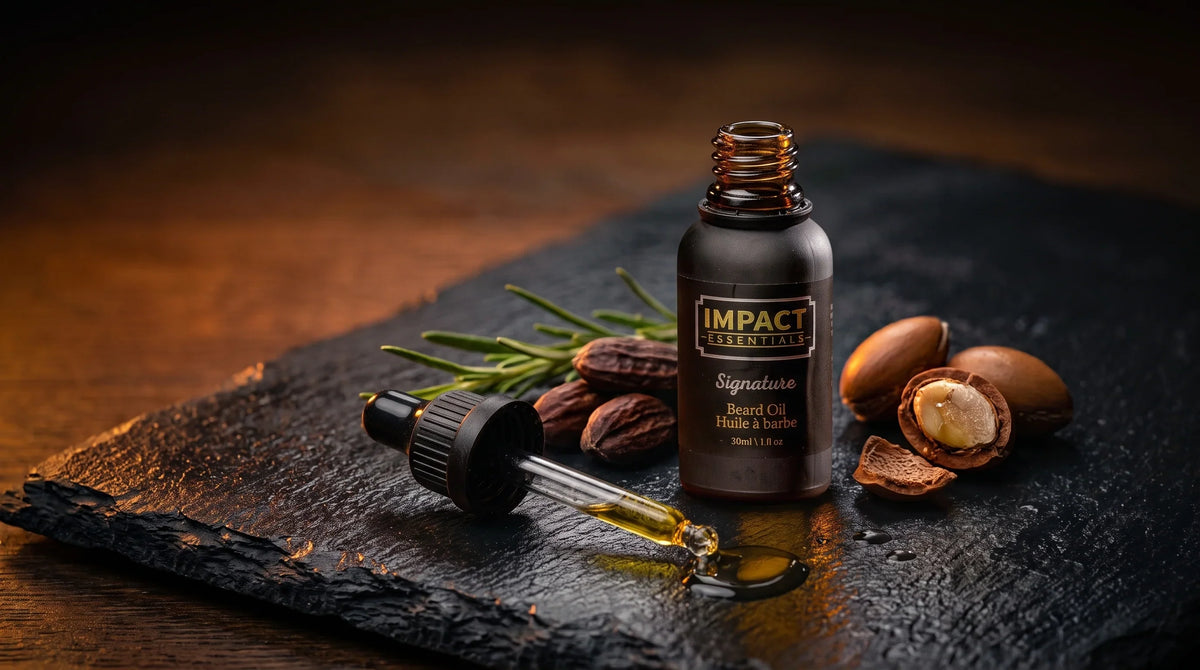
Our handcrafted IMPACT Essentials Signature Beard Oil uses this exact method. By blending organic jojoba, Moroccan argan, and grape seed oils with notes of aged bourbon and roasted coffee, it renews your natural oils without grease. To build a daily routine with pure plant oils, check out The Beard Oils Collection to find your favorite blend.
Frequently Asked Questions
Can you use baby oil as a temporary fix for your beard?
You should not use baby oil even for a quick fix. Baby oil is made of liquid petroleum that traps dirt and blocks moisture. A single drop can clog pores and cause pimples on your jawline.
Does baby oil help your facial hair grow?
No, baby oil does not help hair grow. Mineral oil has no vitamins, proteins, or healthy fats to feed your hair roots. By blocking pores with trapped oil, it can actually harm healthy growth.
Why does baby oil leave my beard feeling greasy?
Baby oil feels greasy because its molecules are too large to soak into hair or skin. While plant oils absorb in minutes, mineral oil sits on top and rubs off on your hands and clothes.
Can baby oil get rid of beard dandruff?
Baby oil hides flakes for an hour, but it makes beard dandruff worse over time. Flakes often come from skin yeast that grows under heavy oil. Mineral oil traps dead skin and feeds that itch.
How do you wash baby oil out of a beard?
To clear out mineral oil, wash your beard with warm water and a gentle sulfate-free beard wash. You may need to wash twice to break up the film. Follow with a light plant oil right away.
What is the best natural oil for a dry beard?
Cold-pressed jojoba oil is the top pick. Jojoba oil matches your skin's natural sebum, so it sinks in fast, calms red skin, and softens coarse whiskers with zero greasy residue.
Elevate Your Daily Grooming Ritual
Real quality means using products that care for your skin. When asking if baby oil belongs in your beard, the medical facts are clear: mineral oil just coats the hair, while plant oils feed skin and hair from within. Treat your morning routine as a moment of quiet focus. By choosing cold-pressed plant oils, you keep your skin barrier safe, your whiskers soft, and your style sharp every single day.